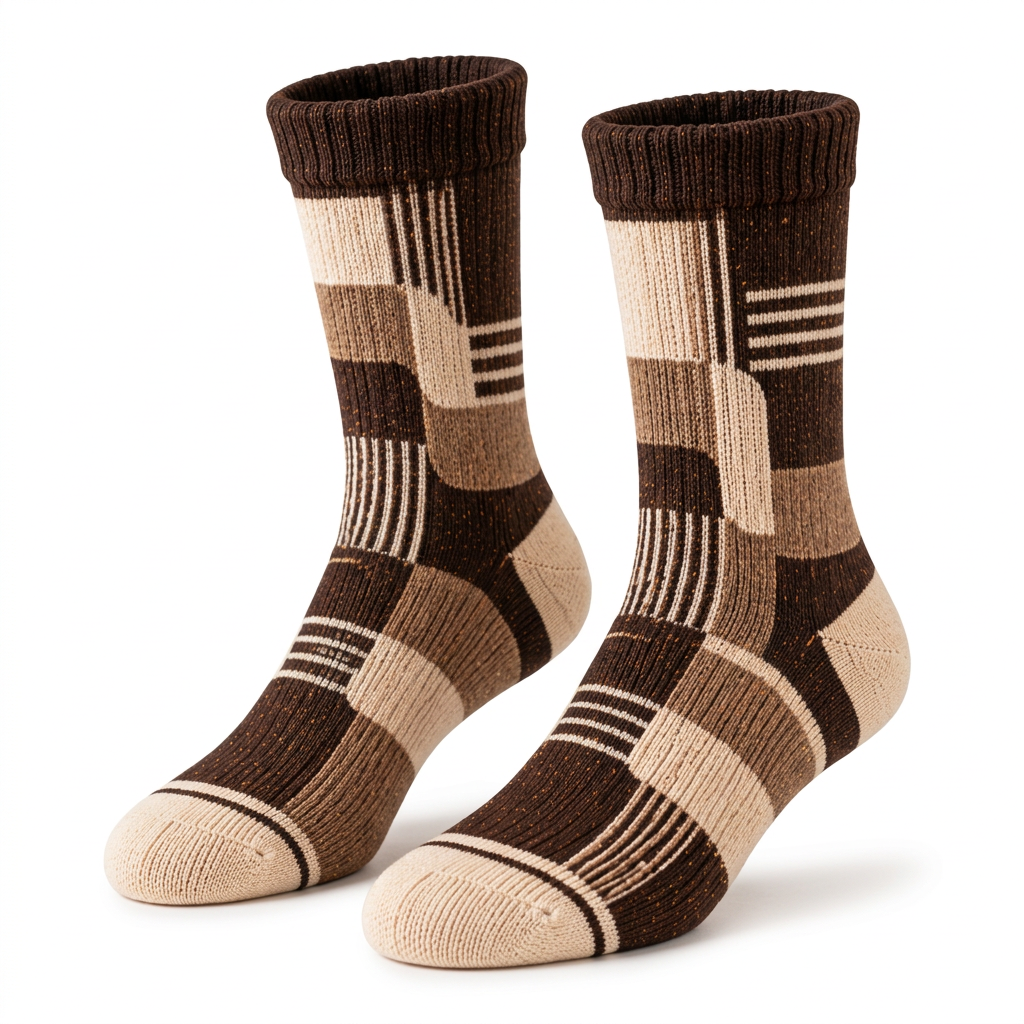



Unisex Chocolate Brown, Mocha & Cream Geometric Patchwork Knit Crew Socks with Fine Stripe Panels and Contrast Toes
Unisex Chocolate Brown, Mocha & Cream Geometric Patchwork Knit Crew Socks with Fine Stripe Panels and Contrast Toes
Couldn't load pickup availability

THE TONAL COMPOSITION / BLOCKS, LINES & LITTLE MOMENTS
Not Quite Checks. Not Just Stripes. Something More Interesting. 🍫
Some patterns reveal everything at once. This one gives you another detail each time you look: a pale rectangle near the cuff, a cluster of narrow lines around the ankle, a mocha block across the instep. Chocolate brown, warm tan and cream come together in a geometric composition that feels varied rather than mechanically repeated.
The design combines broad areas of color with smaller striped panels. Some stripes travel vertically; others cross the sock in short horizontal groups. Their changing direction creates movement within the patchwork, while the close tonal palette keeps the overall impression grounded. Deep brown cuffs frame the top, and rounded cream toes bring a lighter finish to the foot.
Wear the pattern as the one detailed element in an otherwise simple outfit. It has enough contrast to stand out beneath a trouser hem, but its coffee-toned colors connect naturally with cream, oatmeal, camel and washed denim. The interest comes from how the shapes fit together, not from an oversized motif or a bright accent color.
The Composition: Three Scales of Detail 🧩
From a distance: dark and light blocks
Chocolate sections give the pattern its deeper foundation. Cream rectangles bring light into the shaft and foot, while tan and mocha areas bridge the contrast. The blocks are not arranged as a uniform checkerboard. Their proportions and placement change across the sock, giving the layout a more varied rhythm.
A little closer: lines that change direction
Groups of fine cream stripes interrupt the larger shapes. On one section they run down the leg; on another they form short horizontal bars. This shift between vertical and horizontal creates a second pattern inside the first, so the sock offers more than a sequence of plain squares.
Up close: a visibly knitted surface
The reference shows knitted lines running through the color sections, with tiny tonal variations visible in the darker brown areas. That surface catches light differently from a flat graphic print. The geometry remains clear, but its edges are carried by stitches rather than a glossy, perfectly smooth surface.
A Palette Built for Your Neutral Wardrobe 🎨
Chocolate anchors the cuff and several larger sections of the foot and shaft. It provides the strongest outline against pale trousers, making the lighter inserts more noticeable.
Mocha and tan soften the step between dark brown and cream. These middle tones are useful styling links to camel layers, sandy trousers and warm wooden accessories.
Cream appears in the larger pale blocks, the fine stripes and the rounded toe and heel sections. Repeating that pale tone in a sweater or shirt can connect the entire outfit without requiring an exact color match.
The result is a warm, brown-led composition rather than a stark black-and-white contrast. Lighting and screens can shift individual shades, but the relationship between the deepest brown, the middle tones and the pale accents is the key to the design.
One More Round Before the Afternoon Ends 🎲

A wooden game board, a camel sofa and a pair of plain knits make a relaxed backdrop for the patterned socks. One outfit starts with a cream sweater and mocha trousers; the other reverses the balance with a tan cardigan and pale trousers. Their shared detail sits at the ankle, tying the looks together without making the clothing identical.
The socks add the smaller shapes that the larger garments leave out. Broad blocks echo the simple color areas above them, while the narrow stripes provide the closer-up interest. You can borrow the same idea with a plain top, neutral trousers and a hem that allows part of the shaft to remain visible.
The Styling Edit: Choose Your Starting Point 👖
Light layers, clear contrast
Try cream trousers with an oatmeal sweater. The dark cuff becomes a neat border below the hem, and the chocolate blocks stand out against the pale clothing. Keep accessories simple if you want the small striped panels to remain the most detailed part of the outfit.
Warm tones, a softer transition
Use camel, sand or muted tobacco to pick up the middle shades. You do not need every brown to match precisely. A family of related tones can create a more relaxed effect than an exact head-to-toe match, particularly when the socks already contain several shades.
Denim, with a different temperature
Washed blue denim adds a cooler counterpoint to the warm pattern. A cream shirt or tan knit links it back to the socks. Turn up the hem if needed to show the dark cuff and a section of patchwork rather than hiding the design entirely.
Deeper clothing, pale details
Chocolate or charcoal trousers let the darker sections blend into the outfit while the cream blocks become the accent. Add one lighter layer above to keep a visual connection to the pale toe and striped inserts.
The Finishing Details, from Cuff to Toe 🧵
- Deep brown ribbed cuff: A solid upper border separates the varied pattern from the top edge.
- Geometric color blocking: Cream, mocha and chocolate shapes change across the shaft and foot.
- Fine stripe clusters: Vertical and horizontal panels introduce smaller-scale detail between the blocks.
- Pale rounded toe: A cream finish, edged with a narrow dark line, balances the heavier brown areas.
- Cream heel section: Repeats the pale contrast at the back and side of the foot.
- Crew silhouette: Provides room for the mixed geometry to show above a suitable trouser hem.
Look at the pair as a whole and the solid cuff and pale toe matter as much as the patchwork. They give the design a clear beginning and ending, keeping the middle section varied without making every surface equally busy.
A Quieter Scene, the Same Shared Detail ☕

At the window, the game gives way to two mugs and an unhurried pause. The same cream and tan clothing keeps the palette familiar, while the angled view shows another side of the patchwork. The cream toes and heels become especially visible, revealing how the lighter details carry around the foot.
Matching accessories offer a small point of connection while leaving room for individual choices. Wear the pattern with someone else or let it be your own signature detail. The photographs show coordinated styling, not an included two-person bundle or a promise that one size fits both models.
A Few Useful Notes Before Choosing 🔎
Is this the original regular checkerboard?
No. This version combines differently sized geometric blocks with grouped horizontal and vertical stripes. The dark brown cuff and cream toe also distinguish it from a simple repeating check pattern with a dark toe.
What does unisex describe?
The styling direction. Fit depends on confirmed measurements and available sizes, not on the models. Choose the appropriate size and quantity separately for each wearer.
Can the photographs confirm the material?
No. A visibly knitted surface does not establish fiber percentages, cushioning, insulation, moisture management or compression. Use confirmed product specifications for those details rather than inferring them from the texture.
How should the socks be washed?
Follow the actual garment care label. The reference photograph does not establish washing temperature, drying method or shrinkage behavior.
Make Room for a Different Kind of Geometry 🤎
A plain outfit does not need much to gain a point of interest. Here, it might be a pale block beneath a rolled hem, a row of fine lines across the foot, or the contrast between the chocolate cuff and the cream toe. Each detail belongs to the same warm palette, giving you several ways to connect the socks to pieces you already enjoy wearing.
Warm tones. Varied shapes. Your own way to put them together.
Bring chocolate, mocha and cream patchwork into your everyday rotation with a patterned finishing touch that rewards a closer look.